
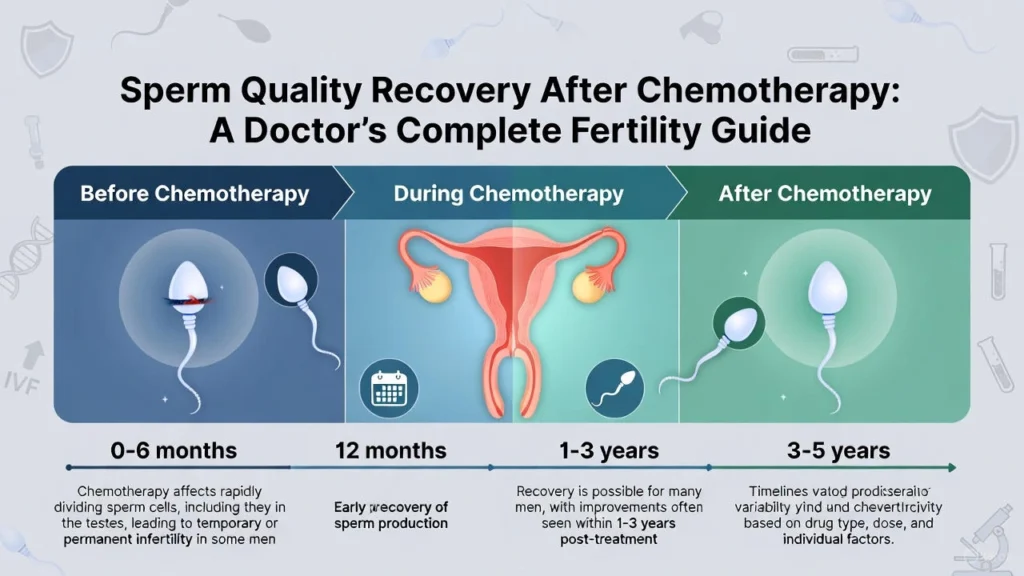
Sperm Quality Recovery After Chemotherapy: A Doctor’s Complete Fertility Guide
Introduction
Cancer survival rates have improved dramatically over the past two decades, allowing many men to return to normal life after treatment. However, fertility concerns remain one of the most distressing long-term effects for male cancer survivors. One of the most common questions I hear in clinical practice is whether sperm quality recovery after chemotherapy is possible and how long it may take.
Chemotherapy is lifesaving, but it can significantly affect sperm production, motility, morphology, and DNA integrity. The good news is that sperm quality recovery after chemotherapy does occur in many men, although the timeline and extent of recovery vary widely depending on several medical and personal factors. Understanding what happens to sperm during chemotherapy, how recovery occurs, and what steps can be taken to improve outcomes is essential for men who wish to father children after cancer.
This guide provides a complete, evidence-based explanation of sperm quality recovery after chemotherapy, including causes, symptoms, diagnosis, treatment options, natural support strategies, and fertility planning
1. How Chemotherapy Affects Male Fertility
To understand sperm quality recovery after chemotherapy, it is important to first understand how chemotherapy impacts sperm production.
1.1 Normal Sperm Production (Spermatogenesis)
Sperm are produced in the seminiferous tubules of the testes through a continuous process called spermatogenesis. This process takes approximately 64–74 days, followed by sperm maturation in the epididymis. Healthy sperm production depends on:
- Rapidly dividing germ cells
- Proper hormonal signaling (FSH, LH, testosterone)
- Intact testicular tissue
1.2 Why Chemotherapy Damages Sperm
Chemotherapy drugs are designed to kill rapidly dividing cancer cells. Unfortunately, sperm-producing cells also divide rapidly, making them especially vulnerable. Chemotherapy can:
- Destroy developing sperm cells
- Damage sperm DNA
- Disrupt hormonal regulation
- Injure testicular tissue
The degree of damage determines whether sperm quality recovery after chemotherapy will be temporary or permanent.
2. Associated Affecting Sperm Quality Recovery After Chemotherapy
Not all men experience the same fertility outcomes after cancer treatment. Several key factors influence sperm quality recovery after chemotherapy.
Chemotherapy Drugs and Gonadotoxicity
Certain chemotherapy agents are more toxic to the testes than others.
High-risk drugs include:
- Alkylating agents (cyclophosphamide, busulfan, procarbazine)
- Platinum-based drugs (cisplatin)
Moderate-risk drugs include:
- Anthracyclines
- Taxanes
Lower-risk drugs include:
- Antimetabolites (though still not risk-free)
The higher the cumulative dose, the greater the risk of long-term sperm damage.
Treatment-Related Factors
- Duration of chemotherapy
- Combination regimens
- Concurrent radiation therapy (especially pelvic or testicular radiation)
- Bone marrow or stem cell transplantation
Patient-Related Risk Factors
- Younger age may favor recovery, but prepubertal boys are not immune
- Poor baseline sperm quality before treatment
- Pre-existing hormonal disorders
- Smoking, alcohol use, obesity
- Chronic stress and poor nutrition
These variables collectively determine the likelihood of sperm quality recovery after chemotherapy.
3. Symptoms and Signs of Impaired Sperm Quality After Chemotherapy
Sperm damage after chemotherapy is often silent, but some men experience noticeable signs.
3.1 Common Fertility-Related Signs
- Low sperm count (oligospermia)
- Poor sperm movement (asthenozoospermia)
- Abnormal sperm shape (teratozoospermia)
- Complete absence of sperm (azoospermia)
3.2 Hormonal and Sexual Symptoms
- Low testosterone levels
- Reduced libido
- Erectile dysfunction
- Fatigue and mood changes
Psychological distress related to fertility uncertainty is also common and should not be overlooked.
4. Diagnosis and Fertility Testing After Chemotherapy
Proper testing is essential to assess sperm quality recovery after chemotherapy.
4.1 Semen Analysis
This is the first-line test and evaluates:
- Sperm concentration
- Motility
- Morphology
- Semen volume
Testing is usually recommended at least 3 months after chemotherapy, as this corresponds to one full sperm production cycle.
4.2 Hormonal Evaluation
Blood tests may include:
- Follicle-stimulating hormone (FSH)
- Luteinizing hormone (LH)
- Total testosterone
- Prolactin
Elevated FSH often indicates impaired sperm production.
4.3 Advanced Fertility Tests
- Sperm DNA fragmentation testing
- Oxidative stress assays
- Testicular biopsy (in select cases of persistent azoospermia)
Fertility Testing Timeline After Chemotherapy
| Time After Treatment | Expected Findings |
| 3–6 months | Low or absent sperm common |
| 12 months | Early signs of recovery |
| 24 months | Significant improvement in many men |
| 3–5 years | Maximal recovery or permanent damage identified |
5. Sperm Quality Recovery After Chemotherapy: Timeline and Prognosis
5.1 Short-Term Recovery (0–12 Months)
During the first year, sperm counts are often very low or absent. This phase reflects temporary suppression rather than permanent infertility in many cases.
5.2 Medium-Term Recovery (1–3 Years)
This is the most critical period for sperm quality recovery after chemotherapy. Many men show:
- Gradual return of sperm production
- Improving motility
- Better morphology
Studies show that 40–80% of men experience partial or complete recovery during this period, depending on treatment type.
5.3 Long-Term Recovery (3–5+ Years)
Some men continue to improve even several years after treatment. Others may have persistent azoospermia, particularly after high-dose alkylating chemotherapy.
5.4 When Recovery Does Not Occur
Permanent infertility is more likely when:
- High-dose alkylating agents were used
- Radiation involved the testes
- Bone marrow transplantation was performed
6. Treatment Options
6.1 Medical Treatments
There is no universal medication that guarantees sperm recovery, but certain treatments may help selected patients.
- Hormonal therapy for hypogonadism
- Antioxidant therapy to reduce oxidative stress
- Treatment of varicocele if present
These approaches aim to optimize the testicular environment.
6.2 Assisted Reproductive Technologies (ART)
When natural conception is difficult, ART offers effective solutions.
- IVF (In Vitro Fertilization)
- ICSI (Intracytoplasmic Sperm Injection) – even a single sperm may be sufficient
- TESE or micro-TESE for men with azoospermia
- Use of cryopreserved sperm if banked before chemotherapy
Detailed explanations of these options are available on https://erectileandfertilityguide.com, which provides in-depth fertility treatment resources.
7. Natural Ways to Support Sperm Quality Recovery After Chemotherapy
While medical treatments are important, lifestyle optimization plays a critical role in sperm quality recovery after chemotherapy.
7.1 Evidence-Based Supplements
- Coenzyme Q10
- L-carnitine
- Zinc
- Selenium
- Omega-3 fatty acids
- Vitamins C and E
These nutrients support mitochondrial function and reduce oxidative stress.
7.2 Diet for Post-Chemotherapy Fertility
A fertility-supportive diet includes:
- Fruits and vegetables rich in antioxidants
- Whole grains
- Lean protein
- Healthy fats (olive oil, nuts, fish)
The Mediterranean diet has shown benefits for sperm parameters.
7.3 Lifestyle Modifications
- Regular moderate exercise
- Adequate sleep (7–8 hours)
- Stress management
- Avoidance of smoking, alcohol, and recreational drugs
- Avoid excessive heat exposure to the testes
7.4 Checklist for Recovery Support
- Maintain healthy BMI
- Avoid toxins
- Follow fertility-focused diet
- Take supplements under medical guidance
8. Sperm Banking Before Treatment
Cryopreservation before chemotherapy remains the gold standard and offers the highest chance of future biological parenthood.
Post-Treatment Options
- Testicular sperm extraction in select cases
- Experimental testicular tissue freezing (limited availability)
Early counseling is critical and strongly recommended for all cancer patients of reproductive age.
- Pregnancy Outcomes After Sperm Quality Recovery
A common concern is whether sperm produced after chemotherapy is genetically safe.
Genetic Safety
Large studies show:
- No significant increase in birth defects
- No higher risk of childhood cancer
- DNA damage usually resolves as healthy sperm production resumes
When to Attempt Conception
Most experts recommend waiting:
- 6–12 months after chemotherapy completion
This allows damaged sperm to be cleared and healthier sperm to develop.
- Lifestyle and Prevention Strategies for Cancer Survivors
Long-term reproductive health requires ongoing care.
- Regular fertility follow-ups
- Hormonal monitoring
- Sexual health evaluation
- Psychological support
Conclusion
Sperm quality recovery after chemotherapy is a realistic possibility for many men, but it is not guaranteed. Recovery depends on chemotherapy type, dosage, age, baseline fertility, and lifestyle factors. While some men experience full recovery within a few years, others may require assisted reproductive techniques to achieve fatherhood.
Early fertility evaluation, patience, medical guidance, and lifestyle optimization significantly improve outcomes. From a clinical perspective, the most important message is one of cautious optimism: cancer survival does not automatically mean permanent infertility. With modern reproductive medicine, most men have viable paths to biological parenthood after chemotherapy.
FAQs
- Can sperm quality recover after chemotherapy?
Yes, sperm quality recovery after chemotherapy is possible in many men, especially when less gonadotoxic drugs are used. - How long does sperm quality recovery after chemotherapy take?
Recovery may take 1–3 years, with continued improvement up to 5 years in some cases. - Is infertility after chemotherapy permanent?
Not always. Permanent infertility depends on drug type, dose, and radiation exposure. - Which chemotherapy drugs affect sperm the most?
Alkylating agents and platinum-based drugs pose the highest risk. - Can supplements improve sperm quality after chemotherapy?
Antioxidants and micronutrients may support recovery but should be used under medical supervision. - Is it safe to conceive after chemotherapy?
Yes, once recovery occurs and after an appropriate waiting period, conception is generally safe. - What if no sperm return after chemotherapy?
Assisted reproductive techniques such as micro-TESE and ICSI may still allow biological fatherhood. - Should cancer survivors see a fertility specialist?
Yes, early consultation improves fertility planning and outcomes.
References
- American Society of Clinical Oncology (ASCO).
Fertility preservation in patients with cancer.
https://www.asco.org/research-guidelines/quality-guidelines/guidelines/patient-and-survivor-care/fertility-preservation - World Health Organization (WHO).
WHO Laboratory Manual for the Examination and Processing of Human Semen.
https://www.who.int/publications/i/item/9789240030787 - Meistrich ML.
Effects of chemotherapy and radiotherapy on spermatogenesis.
https://pubmed.ncbi.nlm.nih.gov/10432421/ - National Cancer Institute (NCI).
Male reproductive health after cancer treatment.
https://www.cancer.gov/about-cancer/treatment/side-effects/fertility-men - European Society of Human Reproduction and Embryology (ESHRE).
Guidelines on male infertility and cancer survivorship.
https://www.eshre.eu/Guidelines-and-Legal/Guidelines/Male-infertility