
How Long After Ectopic Pregnancy to Conceive Safely? A Complete Medical Guide
Introduction
Experiencing an ectopic pregnancy can be physically painful and emotionally overwhelming. One of the most common and important questions patients ask in my clinical practice is how long after ectopic pregnancy to conceive safely. Beyond grief and recovery, concerns about fertility, future pregnancy risks, and the right timing to try again often create anxiety for individuals and couples.
From a medical standpoint, the answer is not the same for everyone. The safe interval before attempting conception depends on how the ectopic pregnancy was treated, the extent of reproductive organ healing, hormonal recovery, and emotional readiness. With appropriate care, reassurance, and planning, many individuals go on to have healthy pregnancies after an ectopic pregnancy.
This comprehensive guide explains everything you need to know—based on current medical evidence and clinical experience—about recovery, fertility outcomes, and exactly how long after ectopic pregnancy to conceive for the best possible outcome.
1. Understanding Ectopic Pregnancy
An ectopic pregnancy occurs when a fertilized egg implants outside the uterus, most commonly within the fallopian tube. Less commonly, implantation may occur in the ovary, cervix, or abdominal cavity. Because these locations cannot support a growing pregnancy, an ectopic pregnancy is not viable and can pose serious health risks if left untreated.
In a normal pregnancy, the fertilized egg travels through the fallopian tube into the uterus, where it implants into the uterine lining. Any condition that disrupts this journey—such as tubal scarring or inflammation—can increase the risk of ectopic implantation.
From a fertility perspective, an ectopic pregnancy does not automatically mean infertility, but it does require careful management and planning before future conception.
2. Causes That Increase the Risk of Ectopic Pregnancy
Understanding why ectopic pregnancies occur helps guide future prevention and fertility planning.
Common causes and risk factors include:
- Previous ectopic pregnancy
- Damage or scarring of the fallopian tubes
- Pelvic inflammatory disease (PID)
- Sexually transmitted infections (chlamydia, gonorrhea)
- Endometriosis
- Prior pelvic or tubal surgery
- Use of assisted reproductive technologies (such as IVF)
- Smoking
- Congenital abnormalities of the fallopian tubes
Risk Factor Checklist
| Risk Factor | Effect on Tubes |
| PID | Causes inflammation and scarring |
| Prior surgery | Alters tubal anatomy |
| Smoking | Impairs tubal motility |
| Endometriosis | Leads to adhesions |
| Previous ectopic pregnancy | Raises recurrence risk |
If you are concerned about fertility risks, additional educational resources are available at
https://erectileandfertilityguide.com, which provides evidence-based reproductive health guidance.
3. Symptoms of Ectopic Pregnancy You Should Know
Early symptoms of ectopic pregnancy may resemble a normal pregnancy, which is why early diagnosis is crucial.
Early symptoms may include:
- Missed period
- Light vaginal bleeding
- Mild pelvic discomfort
Advanced or emergency symptoms include:
- Sharp or severe lower abdominal pain
- Shoulder tip pain (due to internal bleeding)
- Dizziness or fainting
- Heavy vaginal bleeding
Prompt diagnosis not only saves lives but also helps preserve fertility and influences how long after ectopic pregnancy to conceive safely.
4. How Doctors Diagnose an Ectopic Pregnancy
Diagnosis typically involves a combination of clinical assessment and investigations.
Key diagnostic tools include:
- Serial hCG blood tests: Abnormally rising hormone levels
- Transvaginal ultrasound: Absence of intrauterine pregnancy
- Progesterone levels: Often lower than expected
- Laparoscopy: Used when diagnosis is uncertain or emergency surgery is required
Early diagnosis allows for less invasive treatment, which can positively affect future fertility.
5. Treatment Options and How They Affect Future Conception
The treatment approach directly influences recovery time and determines how long after ectopic pregnancy to conceive.
5.1 Medical Treatment: Methotrexate
Methotrexate is a medication that stops the growth of pregnancy tissue and allows the body to absorb it naturally.
Key considerations:
- Preserves fallopian tube structure
- Requires close monitoring of hCG levels
- Depletes folic acid, essential for fetal development
Recommended waiting period:
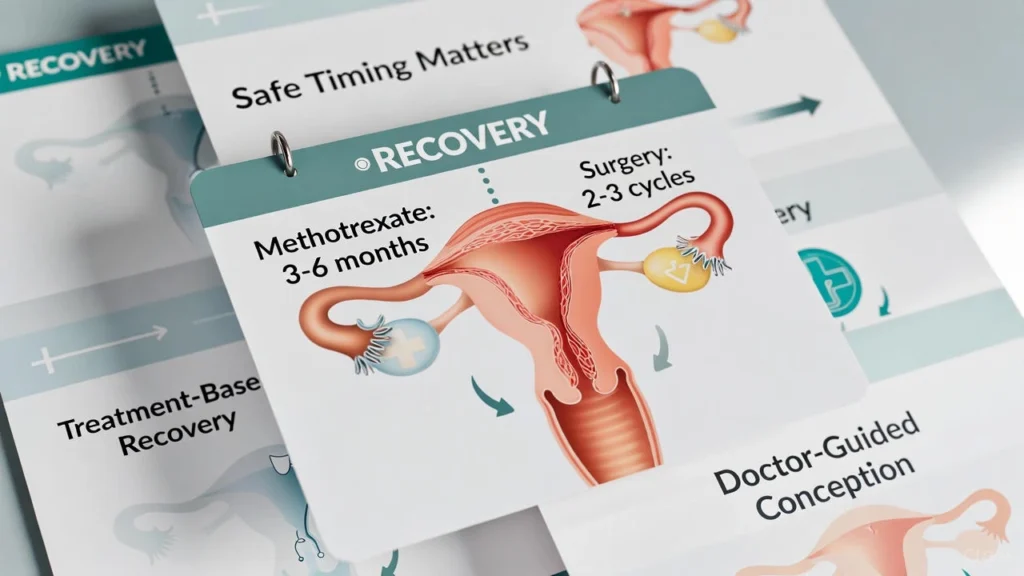
👉 At least 3 months, often up to 6 months, before attempting conception
This waiting period allows methotrexate to fully clear from the body and folic acid levels to normalize.
5.2 Surgical Treatment
Surgery may be required if the ectopic pregnancy has ruptured or medical treatment is unsuccessful.
Types of Surgery:
- Salpingostomy: Removes pregnancy while preserving the tube
- Salpingectomy: Removes the affected fallopian tube
Many patients conceive naturally even with one remaining fallopian tube.
Comparison: Treatment and Conception Timing
| Treatment Type | Waiting Period |
| Methotrexate | 3–6 months |
| Salpingostomy | 2–3 cycles |
| Salpingectomy | 2–3 cycles |
| Expectant management | After hCG normalizes |
6. How Long After Ectopic Pregnancy to Conceive Safely
This is the most important section for patients planning future pregnancy.
General recommendation:
Wait until:
- hCG levels return to zero
- Menstrual cycles normalize
- Emotional and physical recovery is complete
After Methotrexate Treatment
Because methotrexate interferes with folate metabolism, conceiving too early increases the risk of birth defects.
Doctor’s recommendation:
- Wait at least 3 months
- Resume folic acid supplementation before trying to conceive
After Surgical Treatment
If surgery was uncomplicated and recovery is smooth:
- Wait 2–3 menstrual cycles
- Allow tissue healing and uterine lining regeneration
After Expectant Management
In select cases where the body resolves the ectopic pregnancy naturally:
- Conception may be attempted once hCG is zero
- Medical supervision is essential
Ultimately, how long after ectopic pregnancy to conceive should be individualized and guided by your healthcare provider.
7. Factors That Affect How Soon You Can Conceive Again
Several personal factors influence recovery and readiness:
- Age and ovarian reserve
- Tubal health
- Presence of pelvic infections
- Hormonal balance
- Emotional well-being
A fertility-focused evaluation, as discussed in educational resources at
https://erectileandfertilityguide.com, can help optimize outcomes.
8. Fertility Chances After an Ectopic Pregnancy
Encouragingly, most patients go on to have successful pregnancies.
Statistics from clinical studies show:
- 60–70% achieve natural pregnancy within 2 years
- Risk of repeat ectopic pregnancy: 10–15%
- IVF significantly reduces recurrence risk in tubal disease
Having one healthy fallopian tube is often sufficient for natural conception.
9. How to Prepare for a Healthy Pregnancy After Ectopic Pregnancy
Preparation improves outcomes and reduces anxiety.
Preconception checklist:
- Medical clearance
- Pelvic ultrasound if needed
- Blood tests (hormones, infections)
- Folic acid supplementation
- Early pregnancy monitoring plan
10. Lifestyle Tips to Improve Fertility After Ectopic Pregnancy
- Stop smoking
- Maintain a healthy BMI
- Treat pelvic infections promptly
- Reduce stress
- Seek early pregnancy scans in future pregnancies
These steps reduce the risk of recurrence and support healthy conception.
11. Emotional Recovery Before Trying to Conceive Again
An ectopic pregnancy is a significant loss. Fear of recurrence is common.
Helpful strategies include:
- Counseling or therapy
- Open partner communication
- Support groups
- Gradual emotional readiness
Mental health recovery is just as important as physical healing when deciding how long after ectopic pregnancy to conceive.
When Medical Advice Is Essential
Seek medical guidance if you experience:
- Persistent pelvic pain
- Irregular periods
- Difficulty conceiving after 12 months
- History of multiple ectopic pregnancies
Early evaluation prevents complications and improves fertility outcomes.
Conclusion
The safest answer to how long after ectopic pregnancy to conceive depends on your treatment method, recovery progress, and overall reproductive health. While general guidelines exist, personalized medical care remains essential.
With proper healing, monitoring, and emotional support, most individuals can look forward to a healthy and successful pregnancy in the future. Always consult your healthcare provider before trying to conceive again, and ensure early monitoring in subsequent pregnancies.
FAQs
- How long after ectopic pregnancy to conceive naturally?
From a clinical standpoint, How Long After Ectopic Pregnancy to Conceive safely naturally depends on the treatment received. Most patients can try after 2–3 menstrual cycles following surgery or 3–6 months after methotrexate therapy.
- Can I get pregnant with one fallopian tube?
Yes, many patients conceive naturally with one healthy fallopian tube. Understanding How Long After Ectopic Pregnancy to Conceive safely helps ensure the remaining tube has healed properly before trying again.
- Is it safe to conceive immediately after ectopic pregnancy surgery?
No. Waiting 2–3 menstrual cycles is medically advised to allow tissue healing, which is an important factor when deciding How Long After Ectopic Pregnancy to Conceive safely
- How soon can I try after methotrexate treatment?
You should wait at least 3 months before trying to conceive, as methotrexate depletes folic acid. This waiting period directly influences How Long After Ectopic Pregnancy to Conceive safely without increasing pregnancy risks.
- What are the chances of another ectopic pregnancy?
The recurrence risk is approximately 10–15%. Careful planning, early scans, and guidance How Long After Ectopic Pregnancy to Conceive safely can significantly reduce complications.
- Does ectopic pregnancy permanently affect fertility?
In most cases, fertility is preserved with timely treatment and follow-up. Knowing How Long After Ectopic Pregnancy to Conceive safely allows patients to plan pregnancy with confidence and appropriate medical supervision.
- Should I have early scans in my next pregnancy?
Yes, early ultrasound is strongly recommended to confirm intrauterine pregnancy, especially for those concerned about How Long After Ectopic Pregnancy to Conceive safely and the risk of recurrence.
References
- American College of Obstetricians and Gynecologists (ACOG)
https://www.acog.org - National Health Service (NHS) UK
https://www.nhs.uk - Mayo Clinic – Ectopic Pregnancy
https://www.mayoclinic.org/diseases-conditions/ectopic-pregnancy - World Health Organization (WHO)
https://www.who.int - PubMed – Fertility Outcomes After Ectopic Pregnancy
https://pubmed.ncbi.nlm.nih.gov