
Shockwave Treatment for Erectile Dysfunction: How It Works, Evidence, Benefits & Limitations
Introduction
Erectile dysfunction (ED) affects millions of men worldwide. For many, oral medications like PDE5 inhibitors (such as sildenafil) are useful, but they don’t always work, or their effect may wane over time. That’s why men and physicians are exploring shockwave treatment for erectile dysfunction — a non-invasive therapy with potential to restore vascular health, improve blood flow, and even reduce reliance on medication.
this article will explain:
- What shockwave treatment is and how it works
- What clinical evidence supports its use
- Who is a good candidate
- How it’s performed & what to expect
- Risks, limitations, and realistic outcomes
1.What Is Shockwave Treatment for Erectile Dysfunction?
- Also known as low-intensity extracorporeal shock wave therapy (Li-ESWT).

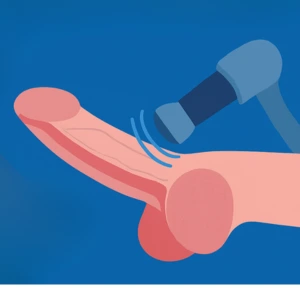
- It involves applying acoustic pulses (shock waves) to the penile tissue (corpora cavernosa / crura) to trigger micro-trauma.
- This stimulates the body’s repair mechanisms: release of growth factors (e.g., VEGF), improved endothelial function, and new blood vessel formation (neovascularization).
- The idea is not just to suppress symptoms (like medications do), but to regenerate tissue and improve natural erectile ability.
2.Clinical Evidence
2.1 Meta-analyses & Systematic Reviews
- A 2025 Cochrane review concluded Li-ESWT may improve erections in the long term; short-term improvements in penile rigidity were also observed. Certainty of evidence is low due to variations in treatment protocols.
- A large systematic review / meta-analysis combining ~15 studies showed significant improvement in ED outcomes (measured by IIEF scores), especially in vasculogenic ED.
2.2 Randomized Controlled Trials
- A Phase II RCT involving 87 men compared two schedules of Li-SWT over 1 week vs 2 weeks. At 6 months follow-up, both groups showed statistically significant improvement in IIEF‐EF and in erection hardness scores, with no major adverse effects.
- Another RCT (n=60) comparing Li-ESWT vs sham therapy in men who failed medical therapy (PDE5 inhibitors) showed improvements in IIEF and Erection Hardness Score sustained at 6 months.
2.3 Observational & Technology-Comparison Studies
- A retrospective multi-institutional study compared different shockwave devices / protocols. Improvements were seen in SHIM, IIEF-5, and EHS scores; but differences between focused vs non-focused regimens suggest that device choice and protocol matter.
- Studies following men after radical prostatectomy also show promise: Li-ESWT showed modest improvements in erectile function in that cohort.
3.Who Is a Good Candidate?
Shockwave therapy is not for everyone. Good candidates tend to share certain profiles:
- Men with vasculogenic ED (poor blood flow) rather than purely psychological, neurological, or hormonal causes.
- Mild to moderate ED rather than severe or completely refractory cases.
- Those who have failed or wish to reduce dependence on medications (PDE5 inhibitors) but are still physically capable of response.
- No major contraindications (e.g., severe penile fibrosis, certain vascular disorders, active infection, poor wound healing).
4.Treatment Protocols
4.1 Sessions & Schedule
- Common schedules: 2 times per week for 3 weeks, followed by break, then another round. Some studies used 5 weeks of treatment.
- Number of shockwaves per session ranges (e.g. 3000–6000 pulses), depending on device, energy flux density.
- Duration of each session ~15-20 minutes. No anesthesia usually required.
4.2 Expected Improvements & Timeline
- Improvement often seen by 1-3 months post-treatment. Some studies show benefits at 6 months.
- Results tend to decline gradually; maintenance therapy may be needed in some cases. Long-term durability (>1 year) is less well proven.
5.Risks, Side Effects & Limitations
- Side effects are generally mild: discomfort, slight bruising, transient pain in treated areas. Rare serious adverse events reported.
- Variability in protocols (device type, energy, pulses, frequency) makes comparing studies difficult.
- Not all study populations are well-controlled (some lack sham control, blinding).
- Expensive, not always covered by insurance. Some clinics may market it aggressively without strong patient benefit.
6.Shockwave Therapy / ESWT Centers for Erectile Dysfunction in USA
| State / City | Clinic / Center | Address / Contact | Notes & Website |
| New York, NY | New York Urology Specialists | Call / Text: 1-646-663-5211 | One of the first urology practices in NYC offering low-intensity ESWT for ED. |
| New York, NY / Hewlett, NY | Michael Rotman, MD | 285 Lexington Avenue, 2nd Floor, NY, NY 10016 / Hewlett, NY | Urologist offering ED shockwave therapy services. |
| Cincinnati, Ohio | The Urology Group | 2000 Joseph E. Sanker Blvd, Norwood, OH 45212 | Offers “Low-intensity Shockwave Therapy for ED” at their locations. |
| Dallas / North Texas, TX | Urology Clinics of North Texas | Multiple clinic locations across North Texas | Their website lists “Shockwave Therapy” as an ED service. |
| Salt Lake City, UT | University of Utah Health – Men’s Health / Urology | University of Utah Health, Salt Lake City, UT | Offers LiSWT (shockwave) as an option for ED treatment. |
| Joliet / Morris, Illinois | Advanced Urology Associates | 815.409.4930 (Joliet, IL) | Now offering shockwave therapy at their Joliet clinic. |
7.How Shockwave Therapy Fits Into ED Treatment Options
Here’s how it compares with other treatments and when to consider:
| Option | Role / Pros | Cons / Limitations |
| PDE5 inhibitors (Viagra, Cialis, etc.) | Fast acting, well accepted; first line | Do not heal underlying vascular issue; side effects; need planning |
| Vacuum erection devices / injections | Alternative when pills fail | Invasive; less natural; discomfort |
| Shockwave therapy | Potential regenerative, reduces need for constant medication; non-invasive | Cost, protocol variability; not yet universally accepted; requires follow-up |
| Lifestyle changes (diet, exercise, smoking cessation) | Improves vascular health overall; low cost | Slow changes; compliance needed |
8.What to Discuss With Your Doctor
If you’re considering shockwave treatment, bring these points up:
- Type of ED (vascular vs other)
- Duration of symptoms & prior treatments tried
- Device type and protocol (number of shocks, energy, frequency)
- Expected outcomes & timeline realistically
- Cost & follow-up plan
- Possible need for combination therapies
Conclusion
Shockwave treatment for erectile dysfunction is a promising therapy with growing clinical evidence, especially for men with mild to moderate vascular ED who want to go beyond symptom relief. It may improve erectile function, erection hardness, and reduce reliance on medications over time. But it’s not a guaranteed cure—protocols vary, long-term data is still emerging, and results differ by patient.
If you’re considering shockwave therapy, discuss it with a qualified urologist or men’s health specialist, ask about the evidence specifically relevant to your type of ED, and ensure realistic expectations.
FAQs
Q1: Is shockwave treatment safe for ED?
Yes. Shockwave Treatment for Erectile Dysfunction has been extensively studied in clinical trials and meta-analyses. The majority report that it is safe and well-tolerated, producing only mild, short-lived side effects such as temporary redness or minor discomfort at the treatment site. Unlike invasive procedures or surgery, Shockwave Treatment for Erectile Dysfunction involves no downtime and poses minimal risk of infection or scarring.
Q2: How soon will I see results after Shockwave Treatment for Erectile Dysfunction?
Most patients notice improvement in erectile quality within 1–3 months following therapy. Research published in journals like The Journal of Sexual Medicine and European Urology shows that Shockwave Treatment for Erectile Dysfunction stimulates the natural healing process by improving penile blood flow and promoting new vessel formation (angiogenesis). Some studies report lasting benefits up to 6–12 months, especially in mild-to-moderate vascular ED cases.
Q3: Does Shockwave Treatment for Erectile Dysfunction require stopping ED medications?
Not at all. Shockwave Treatment for Erectile Dysfunction is often used alongside standard oral therapies like sildenafil (Viagra) or tadalafil (Cialis). It’s not mandatory to stop medication unless your doctor advises otherwise. In fact, many men report that after a few sessions of Shockwave Treatment for Erectile Dysfunction, they need smaller doses or become less dependent on pills, as their natural erections improve.
Q4: Can Shockwave Treatment for Erectile Dysfunction completely cure ED?
While results are promising, Shockwave Treatment for Erectile Dysfunction is not a universal cure. It works best for men with vasculogenic (blood-flow-related) erectile dysfunction — the most common type. The therapy helps repair microvascular damage and rejuvenate penile tissue, which can significantly enhance erectile strength and sustainability. However, outcomes vary depending on age, overall health, and the underlying cause of ED.
Q5: Will I need repeat sessions of Shockwave Treatment for Erectile Dysfunction?
Possibly. The long-term effects of Shockwave Treatment for Erectile Dysfunction are still under research. Some men maintain results for a year or more after an initial 6-session course, while others may benefit from periodic “booster” treatments every 6–12 months. Regular follow-up with your urologist can help determine when maintenance therapy is appropriate based on your erectile response and lifestyle factors.
Q6: Is Shockwave Treatment for Erectile Dysfunction painful?
No — most patients describe Shockwave Treatment for Erectile Dysfunction as mildly uncomfortable at most. The procedure is non-invasive, doesn’t require anesthesia, and each session usually lasts 15–20 minutes. Any sensitivity or tingling fades quickly after treatment, allowing you to resume normal activity immediately.
Q7: How does Shockwave Treatment for Erectile Dysfunction actually work?
This therapy uses low-intensity sound waves to trigger a biological healing process called neovascularization, which promotes new blood vessel growth in penile tissue. By improving circulation and reversing microvascular damage, Shockwave Treatment for Erectile Dysfunction restores natural erectile function rather than simply masking symptoms like medications do.
References
- Cleveland Clinic – Erectile Dysfunction Treatment Options Overview
https://my.clevelandclinic.org/health/diseases/10036-erectile-dysfunction - American Urological Association (AUA) Guidelines – Erectile Dysfunction Management
https://www.auanet.org/guidelines/