
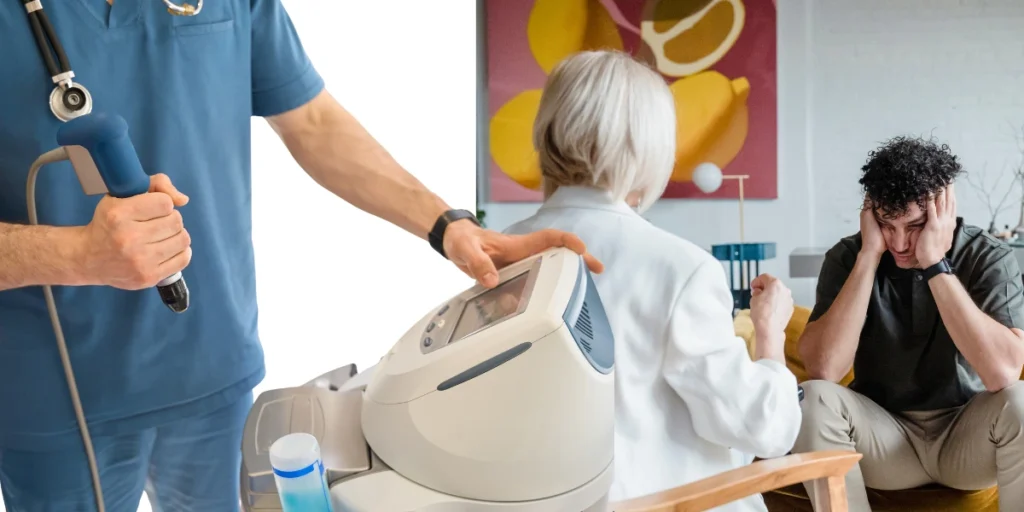
How Long After Shockwave Therapy ED Improves: A Doctor’s Timeline Guide
Introduction
One of the most common questions I hear in clinical practice is how long after shockwave therapy ED improves. Men invest time, money, and hope into this treatment, and understandably, they want clear expectations about when they will notice real results. Erectile dysfunction affects not only sexual performance but also confidence, relationships, and overall quality of life. Shockwave therapy, also called low-intensity extracorporeal shockwave therapy (Li-ESWT), has emerged as a promising restorative option for men with vascular erectile dysfunction.
In this article, I will explain, from a medical standpoint, how long after shockwave therapy ED improves, what factors influence recovery speed, and what men should expect at each stage of treatment.
1. Causes & Risk Factors Addressed by Shockwave Therapy for ED
To understand how long after shockwave therapy ED improves, it is essential to first understand the underlying causes this treatment is designed to correct. Shockwave therapy is most effective for vascular erectile dysfunction, the most common form of ED, where impaired blood flow to the penis prevents strong, sustainable erections.
From a clinical standpoint, shockwave therapy works by inducing controlled microtrauma in penile tissues, which stimulates angiogenesis (new blood vessel formation), improves endothelial function, and enhances nitric oxide signaling. As these biological repairs take time, the severity and cause of ED directly influence the speed of improvement.
Primary Causes Treated by Shockwave Therapy
- Poor penile blood flow (vasculogenic ED)
This is the main target of low-intensity shockwave therapy. Narrowed or damaged penile arteries reduce erection quality and sustainability. - Endothelial dysfunction
Damage to the inner lining of blood vessels impairs natural erectile response. Shockwave therapy helps restore endothelial health. - Diabetes-related ED
Long-standing diabetes damages small blood vessels and penile nerves, often delaying how long after shockwave therapy ED improves. - Atherosclerosis (plaque build-up in arteries)
Common in aging men and those with cardiovascular disease, this condition responds well to regenerative blood flow therapies.
2. Key Risk Factors That Affect Response Time
The following risk factors can slow the healing process and delay visible improvement after treatment:
- Smoking and tobacco use
- Obesity and sedentary lifestyle
- High blood pressure
- High cholesterol
- Metabolic syndrome
- Chronic stress and poor sleep
- Post-prostate surgery circulation damage
Men with mild to moderate vascular ED and fewer systemic risk factors typically respond faster than those with severe, long-standing disease. Educational resources on how systemic health impacts erectile recovery are also discussed at https://erectileandfertilityguide.com.
In clinical practice, patients with primarily vascular causes see the most predictable and sustained improvement from shockwave therapy, whereas men with severe nerve damage, advanced diabetes, or post-radical prostatectomy ED may experience slower or limited response.
3. Diagnosis / Tests Before Shockwave Therapy for ED
Before initiating shockwave therapy, a proper medical evaluation is essential to determine whether a patient is an appropriate candidate and to predict how long after shockwave therapy ED improves. As a clinician, I emphasize that shockwave therapy is not a one-size-fits-all solution and works best when the underlying cause of erectile dysfunction is clearly identified as vascular.
3.1 Detailed Medical and Sexual History
The diagnostic process begins with a comprehensive history, including:
- Duration and severity of erectile dysfunction
- Quality of morning and spontaneous erections
- Response to PDE5 inhibitors (sildenafil, tadalafil, etc.)
- Presence of diabetes, hypertension, heart disease
- Smoking, alcohol use, and physical activity level
- History of pelvic surgery or radiation
This information helps differentiate between vascular ED, hormonal ED, psychogenic ED, and neurogenic ED, which is crucial because shockwave therapy primarily benefits vascular causes.
3.2 International Index of Erectile Function (IIEF Score)
The IIEF-5 or IIEF-15 questionnaire is a validated tool used to objectively grade ED severity:
- Mild ED
- Mild to moderate ED
- Moderate ED
- Severe ED
In my experience, men with mild to moderate vascular ED show the fastest improvement and the most predictable timeline for how long after shockwave therapy ED improves.
3.3 Penile Doppler Ultrasound
This is the most important objective test before shockwave therapy.
It evaluates:
- Peak systolic velocity (arterial inflow)
- End-diastolic velocity (venous leak)
- Overall penile blood flow
Findings consistent with:
- Arterial insufficiency
- Mild venous leakage
strongly predict a good response to shockwave therapy. Patients with severe venous leak or advanced arterial disease may experience delayed or suboptimal results.
3.4 Hormonal Profile
Blood tests are performed when clinically indicated, especially in men with:
- Low libido
- Fatigue
- Reduced muscle mass
Common tests include:
- Total and free testosterone
- Prolactin
- Thyroid-stimulating hormone (TSH)
- Sex hormone–binding globulin (SHBG)
Untreated hormonal disorders can significantly delay how long after shockwave therapy ED improves or blunt the final outcome. Hormonal optimization is often required alongside therapy.
3.5 Cardiovascular and Metabolic Risk Screening
Because erectile dysfunction is an early marker of cardiovascular disease, screening is medically necessary and includes:
- Fasting blood glucose or HbA1c
- Lipid profile
- Blood pressure measurement
- Body mass index (BMI)
3.6 Psychological Assessment When Indicated
In men with:
- Sudden-onset ED
- Situational dysfunction
- Normal nocturnal erections
a psychogenic component is suspected. While shockwave therapy may still help if mild vascular impairment coexists, unaddressed anxiety, depression, or performance fear can limit visible improvement.
Clinical Summary
Accurate diagnosis ensures that shockwave therapy is appropriately targeted, maximizes treatment response, and provides realistic expectations regarding how long after shockwave therapy ED improves. Skipping proper testing is one of the main causes of poor outcomes in clinical practice.
4. Treatment Options
When counseling patients on how long after shockwave therapy ED improves, it is important to place shockwave therapy within the broader context of overall erectile dysfunction management. In clinical practice, combining evidence-based medical treatments with supportive natural strategies often yields the most reliable and sustained results.
A. Medical Treatment Options
- Low-Intensity Extracorporeal Shockwave Therapy (Li-ESWT)
Shockwave therapy is a regenerative treatment, not a stimulant. It works by improving penile blood flow and repairing endothelial dysfunction.
Typical protocol:
- 6 to 12 sessions
- 2 sessions per week
- Each session lasts 15–20 minutes
- No anesthesia required
- No downtime
Medical benefits:
- Stimulates new blood vessel formation
- Enhances nitric oxide release
- Improves arterial inflow to the penis
- Restores natural erection physiology over time
Because healing is gradual, patients usually begin noticing changes several weeks after starting therapy, which directly influences how long after shockwave therapy ED improves.
Educational comparisons of regenerative ED therapies are also available at https://erectileandfertilityguide.com.
- PDE5 Inhibitors (Oral ED Medications)
These include:
- Sildenafil (Viagra)
- Tadalafil (Cialis)
- Vardenafil
- Avanafil
Role alongside shockwave therapy:
- Used as temporary support during the healing phase
- Do not correct the vascular damage
- Work better after shockwave therapy improves blood flow
In many men, dosage requirements decrease after completing shockwave sessions.
- Intracavernosal Penile Injections
Used for:
- Severe ED
- Diabetes-related ED
- Post-prostatectomy ED
These provide a pharmacologic erection but:
- Do not reverse vascular disease
- Are usually reserved for non-responders to conservative therapy
- Can be used temporarily while waiting for shockwave results
- Vacuum Erection Devices (VEDs)
- Improve penile oxygenation
- Prevent tissue fibrosis
- Useful for rehabilitation after surgery
- Often used as an adjunct to shockwave therapy
B. Natural Supportive Treatment Options
Natural strategies do not replace medical therapy but significantly influence vascular recovery and therefore affect how long after shockwave therapy ED improves.
- Exercise and Physical Activity
- Improves endothelial function
- Increases nitric oxide production
- Enhances testosterone levels naturally
- Reduces insulin resistance
Both aerobic exercise and resistance training are beneficial.
- Diet for Vascular Health
A heart-healthy diet also optimizes penile circulation:
- Mediterranean-style eating
- High in fruits, vegetables, whole grains
- Omega-3 fatty acids
- Reduced sugars and trans fats
- Supplements (With Limited Clinical Evidence)
Some supplements may offer supportive benefit:
- L-arginine
- L-citrulline
- Coenzyme Q10
- Panax ginseng
These should only be used under medical guidance, especially in patients taking blood pressure or cardiac medications.
Comparison Table: Shockwave Therapy vs Other ED Treatments
| Treatment | Mechanism | Onset of Action | Duration of Effect | Treats Root Cause | Side Effects |
| Shockwave Therapy | Regenerates blood vessels | Gradual (4–12 weeks) | Long-term | Yes | Minimal |
| PDE5 Inhibitors | Enhanced blood flow temporarily | 30–60 minutes | 4–36 hours | No | Headache, flushing |
| Penile Injections | Direct smooth-muscle relaxation | 5–15 minutes | 1–2 hours | No | Pain, priapism |
| Vacuum Device | Mechanical blood engorgement | Immediate | Temporary | No | Bruising, discomfort |
Key Clinical Insight
From a physician’s perspective, shockwave therapy is most effective when integrated into a comprehensive ED management plan. Men who rely only on shockwave sessions without addressing lifestyle and metabolic risk factors often experience slower or less durable improvement.
Optimizing cardiovascular health, hormones, and sexual confidence during treatment significantly shortens the perceived delay in how long after shockwave therapy ED improves.
5. Lifestyle & Prevention to Maximize Shockwave Therapy Results
From a medical perspective, lifestyle modification is not optional when treating erectile dysfunction. It is a core component of therapy that directly influences how long after shockwave therapy ED improves and how long the results last. Shockwave therapy repairs penile blood vessels, but unhealthy daily habits can continue to damage those same vessels and delay or weaken the response.
5.1 Smoking Cessation
Smoking is one of the strongest predictors of poor response to shockwave therapy.
- Damages penile arteries
- Reduces nitric oxide availability
- Accelerates atherosclerosis
- Impairs angiogenesis (new blood vessel formation)
In clinical observation, men who quit smoking before or during shockwave therapy show faster and more durable improvement than active smokers.
5.2 Weight Management and Obesity Control
Excess body fat is closely linked to:
- Low testosterone
- Insulin resistance
- Chronic inflammation
- Endothelial dysfunction
Even modest weight loss improves erectile function by enhancing blood flow and testosterone levels. This significantly shortens the expected timeline of how long after shockwave therapy ED improves.
5.3 Regular Physical Activity
Exercise is one of the most powerful natural enhancers of erectile health.
Benefits include:
- Improved endothelial function
- Increased nitric oxide production
- Better testosterone balance
- Reduced cardiovascular risk
Recommended minimum:
- 150 minutes of moderate aerobic exercise per week
- Plus 2–3 days of resistance training
Men who remain sedentary after shockwave therapy often report slower and less consistent improvements.
5.4 Blood Sugar, Blood Pressure, and Cholesterol Control
Poorly controlled:
- Diabetes
- Hypertension
- Hyperlipidemia
will continue to damage penile microcirculation even after shockwave therapy.
Clinical management should include:
- HbA1c optimization
- Blood pressure normalization
- Statin therapy when indicated
5.5 Stress Reduction and Mental Health
Chronic stress elevates cortisol, suppresses testosterone, and worsens erectile performance. Severe anxiety and depression can also create a functional erectile block even when blood flow improves.
Effective strategies include:
- Cognitive behavioral therapy
- Mindfulness and meditation
- Adequate sleep (7–8 hours nightly)
- Addressing relationship stressors
Psychological optimization often accelerates perceived improvement after therapy.
5.6 Alcohol Use in Moderation
Excessive alcohol intake:
- Suppresses testosterone
- Impairs nerve signaling
- Worsens vascular health
Moderate consumption or abstinence supports faster erectile recovery.
Checklist
- Stop smoking completely
- Achieve healthy body weight
- Exercise regularly
- Control blood sugar, blood pressure, and cholesterol
- Manage stress and sleep
- Limit alcohol intake
Clinical Takeaway
In real-world practice, patients who actively follow lifestyle and preventive measures invariably experience:
- Faster response to shockwave therapy
- Greater improvement in erection strength
- Longer-lasting results
Lifestyle optimization is one of the strongest modifiers of how long after shockwave therapy ED improves and determines whether improvement is partial, complete, or short-lived.
Conclusion
From a clinical standpoint, the question how long after shockwave therapy ED improves does not have a single fixed answer, because recovery depends on vascular health, metabolic control, age, and lifestyle factors. However, in most medically appropriate candidates with vascular erectile dysfunction, meaningful improvement typically begins within 4 to 8 weeks, with maximal results developing by 8 to 12 weeks or longer after completing the full treatment protocol.
Shockwave therapy is fundamentally different from pills or injections because it works by repairing penile blood flow at the cellular level rather than providing a temporary mechanical or chemical erection. This regenerative process takes time, but the advantage is the potential for natural, long-term erectile improvement rather than short-lived symptom control.
Men who achieve the best and fastest results are those who:
- Have mild to moderate vascular ED
- Maintain good control of diabetes and blood pressure
- Avoid smoking and excess alcohol
- Exercise regularly and manage weight
- Address psychological stress and sleep quality
Equally important is accurate diagnosis and realistic expectation-setting before treatment. When shockwave therapy is selected for the right patient and combined with proper medical and lifestyle management, it offers one of the most promising restorative options currently available for erectile dysfunction.
FAQs
- How long after shockwave therapy ED improves in most men?
In most appropriately selected patients with vascular erectile dysfunction, how long after shockwave therapy ED improves is typically 4 to 8 weeks after starting treatment. Maximum benefit is usually seen by 8 to 12 weeks after completing the full course of sessions. Men with better overall vascular health tend to improve faster.
- Can ED improve after the first shockwave session?
It is uncommon to see meaningful improvement after a single session. Shockwave therapy works through gradual vascular regeneration, not immediate stimulation. Some men may notice subtle changes after 2 to 3 sessions, but clinically significant improvement usually requires completion of the full protocol.
- How long do shockwave therapy results last for ED?
In responders, benefits can last 12 to 24 months or longer, especially when lifestyle and metabolic risk factors are well controlled. However, because ED is often linked to progressive vascular disease, some men may require maintenance sessions to sustain results. Educational guidance on long-term ED care is available at https://erectileandfertilityguide.com.
- Who responds fastest to shockwave therapy for ED?
The fastest and most reliable responders are men with:
- Mild to moderate vascular ED
- No severe diabetes or nerve damage
- Good testosterone levels
- Healthy lifestyle habits
- No major pelvic surgery history
In these men, how long after shockwave therapy ED improves is often closer to the early part of the 4–8 week range.
- What if shockwave therapy does not improve ED?
If there is no meaningful response by 12 weeks after completing treatment, reassessment is required. Common reasons include:
- Incorrect diagnosis (non-vascular ED)
- Severe diabetes-related nerve damage
- Advanced atherosclerosis
- Untreated hormonal disorders
Alternative or combination treatments such as medications, injections, or vacuum devices may then be considered.
- Is shockwave therapy permanent for erectile dysfunction?
Shockwave therapy is not a permanent cure, but it can provide long-lasting improvement by restoring penile blood flow. Since underlying conditions like diabetes, hypertension, and aging continue over time, ongoing health optimization is essential to maintain results.
- Does age affect how long after shockwave therapy ED improves?
Yes. Younger men with early vascular disease often improve faster, while older men with long-standing cardiovascular risk factors may experience delayed or less robust response. Age itself is not a contraindication, but vascular health matters more than chronological age.
References
- Lu Z, Lin H, Wang L, et al. Low-intensity extracorporeal shock wave treatment improves erectile function: A systematic review and meta-analysis. European Urology. 2017;71(2):223–233.
https://www.europeanurology.com/article/S0302-2838(16)30801-5/fulltext - Dong L, Chang D, Zhang X, et al. Effect of low-intensity extracorporeal shock wave on erectile dysfunction: A meta-analysis. Urology. 2019;119:97–103.
https://www.sciencedirect.com/science/article/pii/S0090429519301750 - European Association of Urology (EAU). EAU Guidelines on Sexual and Reproductive Health – Erectile Dysfunction. Latest Clinical Practice Update.
https://uroweb.org/guidelines/erectile-dysfunction - American Urological Association (AUA). Guideline on the Management of Erectile Dysfunction.
https://www.auanet.org/guidelines-and-quality/guidelines/erectile-dysfunction-guideline - Vardi Y, Appel B, Kilchevsky A, Gruenwald I. Does low intensity extracorporeal shockwave therapy have a physiological effect on erectile function? Journal of Sexual Medicine. 2012;9(3):772–780.
https://www.jsm.jsexmed.org/article/S1743-6095(15)31446-0/fulltext - Chung E, Cartmill R. Evaluation of clinical efficacy, safety and patient satisfaction rate of low-intensity shockwave therapy for erectile dysfunction: A prospective study. Journal of Sexual Medicine. 2015;12(2):456–467.
https://www.jsm.jsexmed.org/article/S1743-6095(14)01218-7/fulltext - Hatzichristodoulou G, et al. Low-intensity extracorporeal shockwave therapy in erectile dysfunction: A clinical review. Asian Journal of Andrology. 2016;18(3):396–402.
https://www.nature.com/articles/aja201610